

Blog
How Close to Death Can You Fly? Closer Than You Think

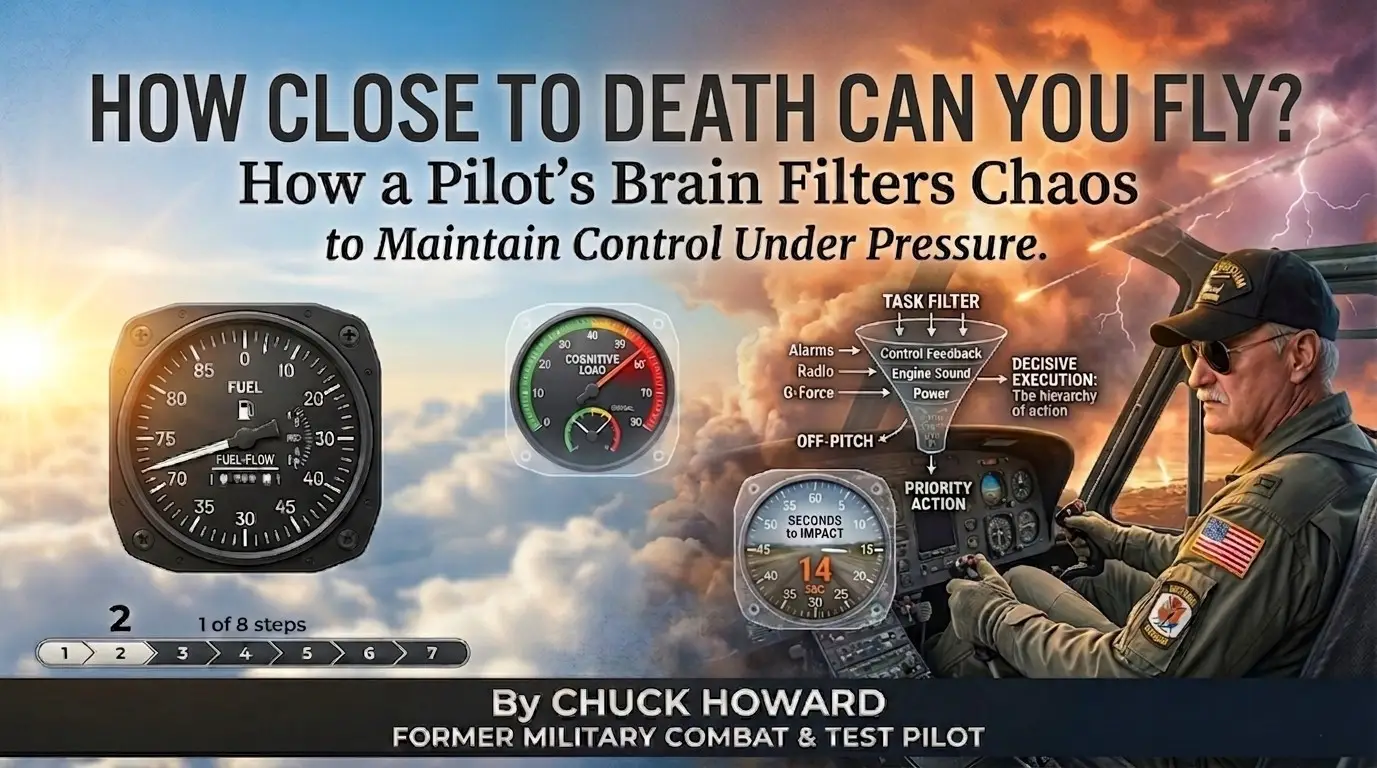
There’s a question people sometimes ask when they hear about combat aviation or high-risk flying: how close do you really get to danger? The assumption is that there’s a buffer—a margin that separates risk from reality. The truth is far less comfortable. In aviation, especially under extreme conditions, that margin is often thinner than anyone expects.
You don’t always realize how close you are in the moment. It’s only afterward, when everything settles, that the distance between control and disaster becomes clear.
The Illusion of Distance
From the outside, flying appears controlled and deliberate. Altitudes are measured, speeds are calculated, and procedures are followed. It gives the impression that everything operates within safe boundaries.
But those boundaries are not fixed. They shift constantly depending on conditions, decisions, and timing. A stable approach can become unstable within seconds. A routine maneuver can become critical with a single misjudgment.
The idea of distance—of being safely removed from danger—is often an illusion.
When Margins Disappear
There are moments in flying when the margin for error compresses to almost nothing. Low-altitude operations, confined landing zones, adverse weather, and high-stress environments all contribute to this effect.
In those moments, precision becomes everything. Small inputs produce large consequences. A slight delay in reaction, a minor miscalculation, or a momentary lapse in attention can cascade quickly.
You don’t have time to correct gradually. You correct immediately—or you don’t recover at all.
The Role of Timing
Timing is one of the most critical factors in aviation, and one of the least forgiving. Many situations are not inherently dangerous until they occur at the wrong moment.
A descent that begins a few seconds too late, a flare initiated slightly too early, or a hesitation in applying power can change the outcome entirely.
These are not dramatic errors. They are small, almost invisible mistakes. But in an environment where margins are already thin, they matter.
The Human Factor
Distance from danger is not just determined by the aircraft or the environment—it is defined by the pilot. Human performance plays a central role in how close a situation gets to failure.
Stress, fatigue, and cognitive overload all affect reaction time and decision-making. Under pressure, even experienced pilots can experience tunnel vision or delayed responses.
The difference is that experienced pilots recognize these effects and manage them. They compensate for their own limitations.
When Experience Takes Over
In critical moments, there is no time for deliberate analysis. Actions are based on recognition and instinct—responses shaped by previous experience.
An experienced pilot does not consciously think through every step. Instead, they identify patterns and react accordingly. This allows for faster, more effective responses when time is limited.
Experience does not eliminate risk, but it increases the ability to manage it.
The Recovery Window
Every dangerous situation has a recovery window—a brief period in which corrective action can prevent escalation. The challenge is that this window is often short and unforgiving.
Recognizing the situation early is key. Acting within that window is critical. Missing it, even by a small margin, can remove the possibility of recovery entirely.
This is why awareness and anticipation are so important. The earlier a problem is identified, the larger the recovery window becomes.
After the Moment Passes
It’s often only after the aircraft is stable again that the realization sets in. You replay the sequence in your mind, examining each decision and each action.
You recognize how small the margin was. How close the outcome came to being different.
These reflections are not about fear—they are about understanding. Each close call becomes a lesson, reinforcing the importance of precision, awareness, and discipline.
Why Pilots Don’t Think About It in the Moment
If pilots constantly focused on how close they were to danger, they wouldn’t be able to function effectively. During flight, especially in high-risk situations, the focus is on execution, not on consequence.
This mental separation is essential. It allows pilots to perform without hesitation. The awareness of risk is always present, but it is controlled and managed rather than overwhelming.
Respecting the Margin
Over time, experienced pilots develop a deep respect for the margins they operate within. They understand how quickly those margins can shrink and how easily they can be exceeded.
This respect influences decision-making. It leads to more conservative choices when conditions demand it and sharper focus when margins tighten.
It replaces overconfidence with awareness.
Conclusion
How close to death can you fly? Closer than most people realize. Not because pilots seek danger, but because the nature of aviation—especially in demanding environments—sometimes places them there.
The difference lies in how that proximity is managed. Through experience, discipline, and awareness, pilots learn to operate within those narrow margins and, when necessary, pull back from them.
Because in aviation, survival isn’t about avoiding risk entirely—it’s about understanding exactly how close you are to it, and responding before that distance disappears.