

Blog
Inside a Pilot’s Mind During an Emergency

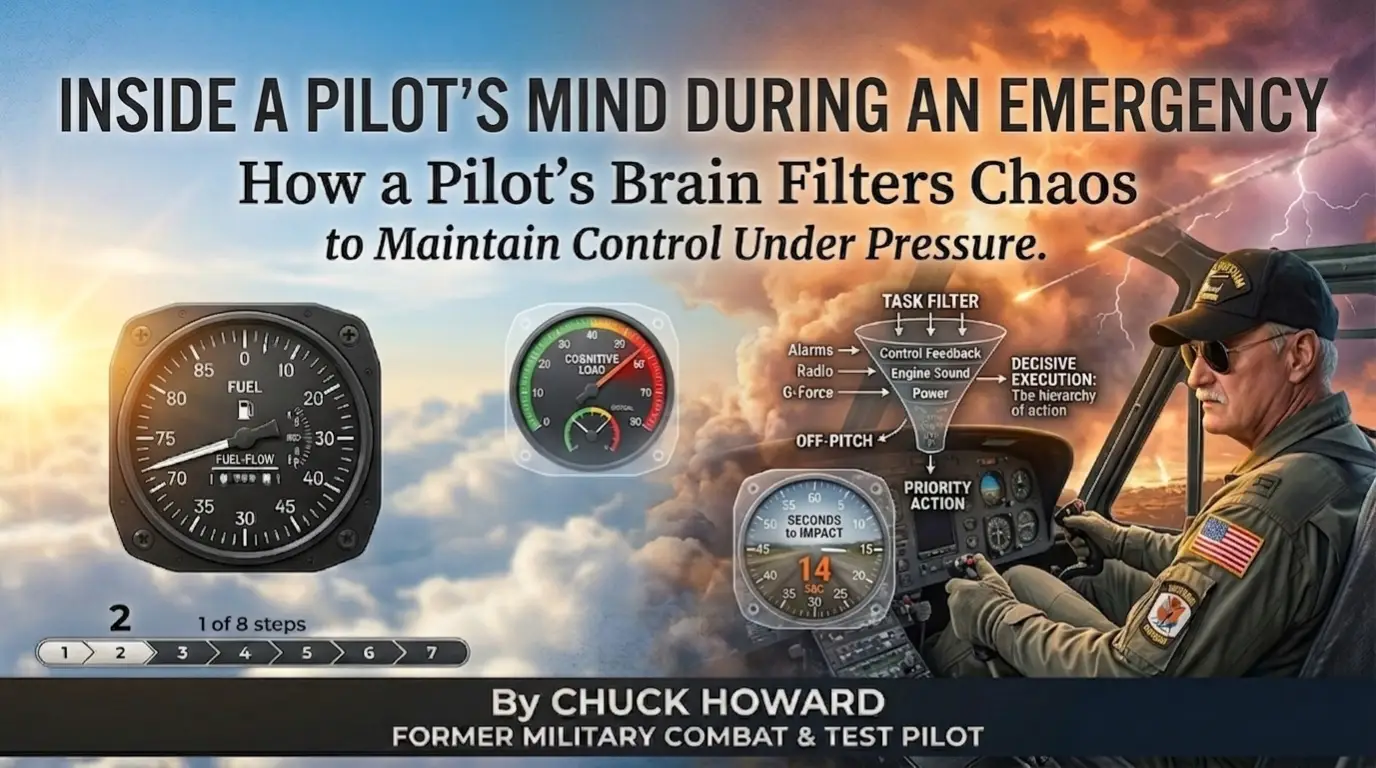
From the outside, aviation emergencies often appear chaotic and overwhelming. Alarms sound, systems fail, and situations escalate rapidly. But inside the cockpit, a trained pilot experiences something very different. When handled correctly, an emergency is not chaos—it is a sequence of priorities, decisions, and actions executed under pressure.
Understanding what happens inside a pilot’s mind during an emergency reveals why training, experience, and mental discipline are just as critical as technical skill.
The First Moment: Recognition
Every emergency begins with recognition. Something changes—a warning light, an unusual sound, a shift in aircraft behavior. The first task is identifying whether the change is significant or routine. Experienced pilots develop a sensitivity to these deviations, allowing them to detect problems early.
Recognition is not just about noticing something is wrong; it is about correctly interpreting what that problem might be. Misidentification at this stage can lead to incorrect actions later.
Establishing Priorities
Once an issue is identified, the pilot’s focus narrows immediately to core priorities. In aviation, these priorities are consistent: maintain control of the aircraft, analyze the situation, and take appropriate action.
This hierarchy is not theoretical—it is ingrained through training. Regardless of the emergency, control of the aircraft always comes first. Without that, nothing else matters.
Managing Cognitive Load
Emergencies place significant strain on cognitive resources. Information increases while time decreases. Pilots must process multiple inputs simultaneously—instrument readings, environmental conditions, radio communication, and aircraft response.
Avoiding Overload
A key mental skill is filtering. Not all information is equally important. Experienced pilots learn to discard irrelevant inputs and focus only on what directly impacts the situation. This prevents cognitive overload and preserves decision-making ability.
The Role of Checklists
Checklists exist to standardize responses and reduce the risk of omission. In many emergencies, they provide a structured path forward. However, their effectiveness depends on timing and context.
When to Use Them—and When Not To
In time-critical situations, there may not be an opportunity to reference a checklist immediately. Pilots rely first on memory items—critical actions that must be performed without delay. Once the situation stabilizes, checklists are used to verify and complete procedures.
This balance between instinct and procedure is essential.
Decision-Making Under Pressure
Emergencies rarely present clear, single-solution problems. Pilots must evaluate options quickly, often with incomplete information.
Choosing the Best Available Option
The goal is not perfection—it is effectiveness. A timely, adequate decision is often better than a delayed, optimal one. Experienced pilots understand this trade-off and act accordingly.
They also remain flexible. As new information becomes available, decisions are reassessed and adjusted.
Emotional Control
Fear and stress are natural responses to emergency situations. The difference lies in how they are managed.
Maintaining Composure
Pilots are trained to compartmentalize emotion. This does not mean eliminating stress, but preventing it from interfering with performance. Techniques such as controlled breathing and deliberate pacing help maintain focus.
Emotional control allows the pilot to think clearly, even when the situation is deteriorating.
Communication and Coordination
In multi-crew environments, communication becomes critical. Tasks must be distributed, information must be shared, and actions must be coordinated.
Clear and Concise Interaction
Effective communication during an emergency is direct and unambiguous. There is no room for unnecessary detail or confusion. Each crew member understands their role and executes it.
Even in single-pilot operations, communication with air traffic control plays a key role in managing the situation.
Anticipating Outcomes
While addressing the immediate issue, pilots are also thinking ahead. What happens if the situation worsens? What are the available options? Where is the safest place to land?
Staying Ahead of the Aircraft
Anticipation prevents reactive flying. By considering future scenarios, pilots maintain control of the situation rather than being driven by it.
This forward-thinking approach is a hallmark of experienced aviators.
The Importance of Experience
Training provides the framework, but experience refines execution. Exposure to varied situations builds pattern recognition, allowing pilots to respond more efficiently.
Experienced pilots are not immune to emergencies—they are better prepared to handle them.
After the Emergency
Once the situation is resolved, the process is not complete. Pilots review what happened, analyze their decisions, and identify areas for improvement.
Continuous Learning
This reflection transforms experience into skill. Each emergency, handled correctly, becomes a reference point for future situations.
Conclusion
Inside a pilot’s mind during an emergency, there is no panic-driven chaos—there is structure. Recognition, prioritization, decision-making, and execution follow a disciplined pattern shaped by training and experience.
Technology may assist, and procedures may guide, but it is the pilot’s mental framework that determines the outcome. In critical moments, clarity of thought is as important as control of the aircraft.
Because in aviation, the difference between escalation and recovery often comes down to how a pilot thinks under pressure.