

Blog
What It Really Means to Be a “Seat-of-the-Pants” Pilot

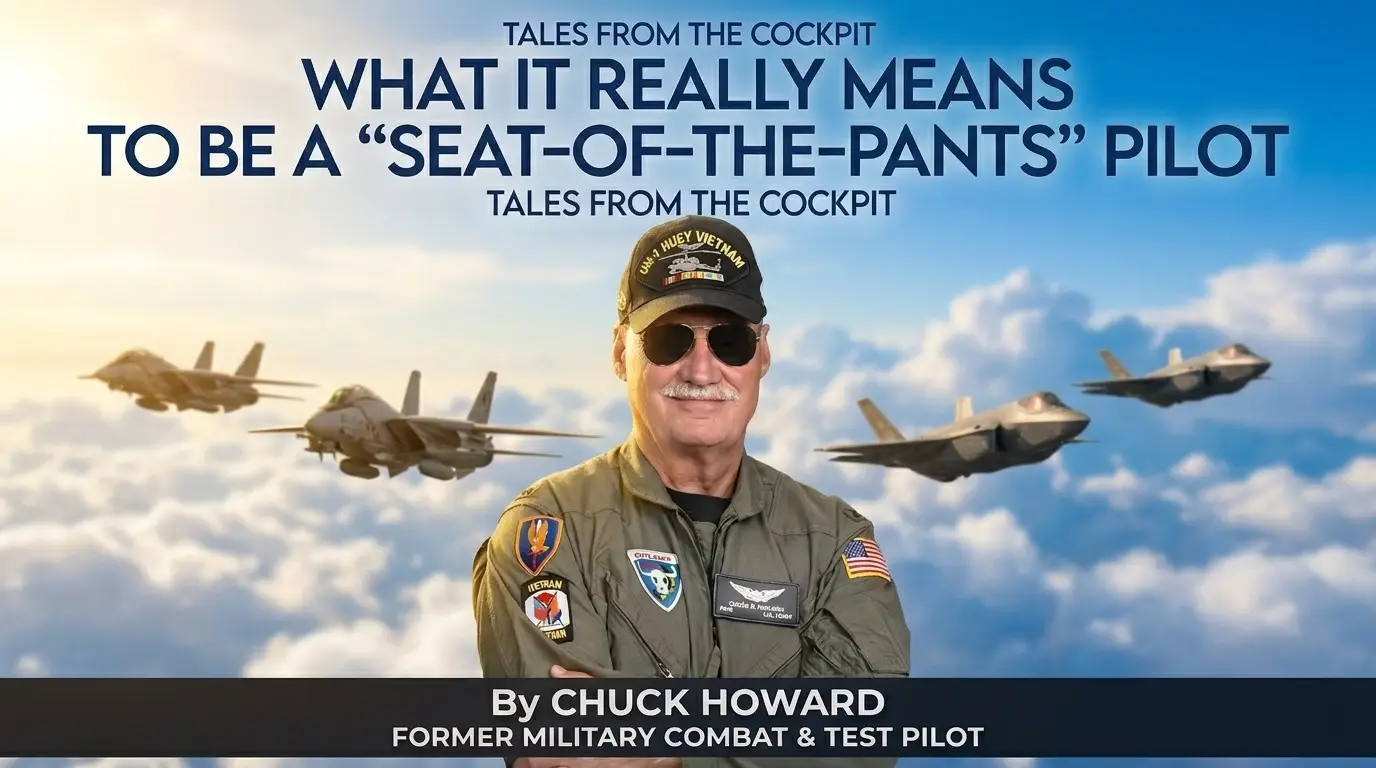
Introduction
In today’s aviation landscape, technology dominates the cockpit. GPS navigation, autopilot systems, fly-by-wire controls, and advanced avionics have transformed flying into a highly automated discipline. But long before these tools became standard, pilots relied on something far more primitive—and arguably more powerful: instinct.
This is where the term “seat-of-the-pants pilot” comes from. It describes a pilot who flies not just by instruments, but by feel—interpreting subtle cues from the aircraft, the environment, and their own senses. It’s a skill rooted in experience, sharpened by risk, and defined by an intimate understanding of flight.
In this article, we’ll break down what it truly means to be a seat-of-the-pants pilot, why the concept still matters today, and what modern aviators can learn from it.
The Origin of “Seat-of-the-Pants” Flying
The phrase “seat-of-the-pants” isn’t just colorful aviation slang—it’s literal. Early pilots had minimal instrumentation. There were no digital displays, no real-time weather updates, and certainly no automated systems correcting their mistakes.
Feeling the Aircraft
Pilots learned to interpret physical sensations: – Pressure against the body indicated acceleration or deceleration – Shifts in weight suggested climbs or descents – Vibrations hinted at mechanical issues or airflow disruptions
The pilot’s body effectively became an extension of the aircraft’s sensory system.
Navigating Without Technology
Navigation was equally raw. Known as “dead reckoning,” pilots used maps, landmarks, wind direction, and elapsed time to determine their position. In some cases, they even relied on visual cues like cloud formations or terrain patterns.
This method required constant attention, adaptability, and mental calculation—skills that defined early aviation mastery.
The Core Skills of a Seat-of-the-Pants Pilot
Being a seat-of-the-pants pilot isn’t about rejecting technology—it’s about developing foundational skills that technology can’t replace.
Situational Awareness
A key trait is heightened situational awareness. These pilots are constantly scanning their environment, anticipating changes, and preparing for contingencies.
They don’t wait for alarms—they sense when something is off.
Sensory Interpretation
Seat-of-the-pants flying depends heavily on interpreting non-instrument cues:
- The sound of the engine
- The feel of the controls
- The pressure in the seat
- The aircraft’s response to inputs
These subtle signals often provide faster feedback than instruments.
Rapid Decision-Making
When flying in unpredictable conditions—such as combat zones or low-altitude maneuvers—there’s no time for hesitation. Decisions must be made instantly, often with incomplete information.
This ability comes from experience, not manuals.
Why This Skill Still Matters Today
With modern aviation systems becoming increasingly advanced, it’s tempting to assume that seat-of-the-pants flying is obsolete. That assumption is dangerous.
Technology Can Fail
No system is infallible. GPS signals can be lost. Instruments can malfunction. Autopilot systems can disengage unexpectedly.
When that happens, pilots must fall back on fundamental skills.
Over-Reliance on Automation
A growing concern in aviation is automation dependency. Pilots who rely too heavily on systems may struggle when those systems fail.
Seat-of-the-pants skills act as a safety net—ensuring pilots remain in control even when technology doesn’t cooperate.
Real-World Scenarios
In high-stress environments—such as emergency landings, combat operations, or extreme weather—intuition and feel often outperform rigid procedures.
The ability to “read” the aircraft in real time can mean the difference between recovery and catastrophe.
The Psychology Behind It
Seat-of-the-pants flying isn’t just physical—it’s deeply psychological.
Confidence vs. Complacency
Experienced pilots develop confidence through repetition and exposure. However, there’s a fine line between confidence and overconfidence.
Seat-of-the-pants pilots must constantly balance instinct with discipline.
Managing Fear and Stress
Flying—especially in challenging conditions—triggers stress responses. The best pilots don’t eliminate fear; they manage it.
They remain calm under pressure, allowing their training and instincts to guide their actions.
Pattern Recognition
Over time, pilots build a mental library of scenarios. This allows them to recognize patterns quickly and respond appropriately.
It’s not guesswork—it’s informed intuition.
Lessons for Modern Pilots
Even in a tech-driven era, the principles of seat-of-the-pants flying remain highly relevant.
Train Beyond the Instruments
Pilots should actively practice flying with limited instrumentation. This builds confidence and reinforces fundamental skills.
Stay Engaged
Automation should assist—not replace—the pilot. Staying mentally engaged during flight ensures readiness for unexpected situations.
Respect the Basics
Understanding aerodynamics, weather patterns, and aircraft behavior is essential. These fundamentals form the backbone of all advanced systems.
The Human Element in Aviation
At its core, aviation is still a human endeavor. Machines may enhance capability, but they don’t replace judgment, instinct, or experience.
Seat-of-the-pants pilots embody this principle. They trust their senses, adapt to changing conditions, and take responsibility for every decision in the cockpit.
This mindset is what separates competent pilots from exceptional ones.
Conclusion
Being a “seat-of-the-pants” pilot isn’t about nostalgia—it’s about mastery. It represents a level of connection between pilot and aircraft that technology alone cannot achieve.
In an age of automation, these skills are more important than ever. They serve as a reminder that no matter how advanced aviation becomes, the pilot remains the most critical component of the system.
Because when everything else fails, it’s not the instruments that save you—it’s what you feel, what you know, and how you respond.